Most toolbox talks fail before they start.
They’re rushed, generic, or delivered like a script read by someone who’s done it 200 times. Workers zone out. Hazards go unaddressed. And when an incident happens, everyone asks: “Didn’t we cover that last week?”
The truth? A toolbox talk isn’t about checking a box. It’s about changing behavior. And that only happens when the topic is relevant, timely, and grounded in real risk.
This guide cuts through the noise. You’ll get high-impact safety toolbox talk topics proven to work in the field—backed by real use cases, delivery tips, and common pitfalls.
Why Most Toolbox Talks Fail
Toolbox talks fail not because they’re unnecessary, but because they’re misapplied.
Common breakdowns include: - Generic content – “Slip, trip, and fall” covered every month with the same three bullet points. - Poor timing – Discussing fall protection the day after a near-miss involving electrical hazards. - One-way delivery – Talking at workers instead of with them. - No follow-up – No tracking of action items, accountability, or effectiveness.
A 2023 study by the National Safety Council found that 68% of crews couldn’t recall the previous week’s safety talk. But when leaders used site-specific scenarios and encouraged worker input, retention jumped to 89%.
The fix? Treat every talk like a mini risk intervention—not a compliance chore.
5 High-Impact Safety Toolbox Talk Topics (With Real Use Cases)
1. Working at Height: Ladders and Scaffolding
When to use it: Before starting roof work, facade repairs, or any task above 6 feet.
Why it matters: Falls are the #1 cause of construction fatalities (OSHA, 2022). But most incidents involve ladders and makeshift platforms—not complex scaffolds.
Real use case: At a Houston HVAC project, a worker leaned too far from a ladder while installing ductwork, tipping it sideways. He escaped with a sprained wrist.
The next morning’s toolbox talk focused on: - The 3-point contact rule - Proper ladder angle (4:1 ratio) - Why “just reaching a little further” is never worth it
Discussion prompt: “Has anyone almost lost balance on a ladder? What made you realize it was unsafe?”
Workers shared stories about unstable bases on uneven ground—sparking a site-wide check of all ladder placements.
2. Hot Work and Fire Prevention
When to use it: Before welding, grinding, or any spark-producing task.
Why it matters: Combustible materials are often overlooked near work zones. A single spark can ignite insulation, sawdust, or hydraulic fluid.
Real use case: A crew in Seattle was prepping a metal beam for welding. They cleared the immediate area but missed a pile of wood scraps 10 feet away, shielded by a temporary wall. A spark jumped and started a smoldering fire detected only by a site camera.
The next talk covered: - Minimum 35-foot clearance rule - Fire watch duration (30 minutes post-work) - How wind direction affects spark travel
Pro tip: Bring in a fire extinguisher and demonstrate PASS technique—hands-on beats lecture every time.
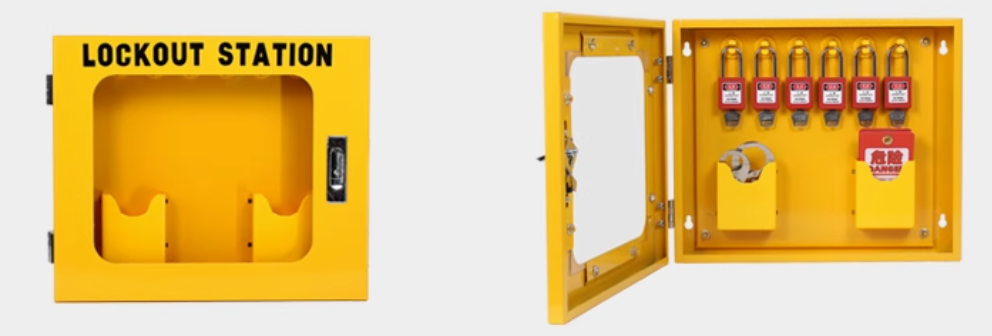
3. Electrical Safety: Lockout/Tagout (LOTO)
When to use it: Before servicing machinery, panels, or during maintenance shutdowns.
Why it matters: 127 workers die annually from electrical incidents (BLS). LOTO violations are consistently in OSHA’s Top 10 citations.
Common mistake: Workers assume “the breaker is off” means it’s safe. But without verification and tagging, someone can flip it back on unknowingly.
Use this checklist in your talk: - Identify energy source - Shut down equipment properly - Isolate with lockout device - Test for zero energy - Tag with worker name and time
Real talk: “If you wouldn’t stick your hand in it, don’t assume it’s safe just because it’s off.”
4. Struck-By and Mobile Equipment
When to use it: On any site with forklifts, dump trucks, or heavy machinery.
Why it matters: 72% of struck-by incidents involve vehicles or falling tools (CPWR). Blind spots are deadly.
Case example: At a Florida bridge project, a flagger was hit by a reversing concrete truck. The driver didn’t see him—despite mirrors and alarms.
Post-incident talk focused on: - High-visibility PPE requirements - Defined pedestrian routes - Hand signals vs. radio communication - Backup alarms and cameras
Engagement tactic: Have crew members stand where blind spots are and describe what they can’t see. It’s eye-opening.
5. Heat Stress and Hydration
When to use it: Early summer, heat waves, or in enclosed spaces like attics or metal buildings.
Why it matters: Heat illness symptoms are often mistaken for fatigue. Dehydration impairs decision-making—increasing other risks.
Key signs to review: - Early: headache, cramps, heavy sweating - Advanced: dizziness, nausea, confusion - Emergency: hot/dry skin, loss of consciousness
Practical solution: Introduce a “buddy monitor” system. Workers check in every 90 minutes. Use color-coded water bottles to track intake (e.g., refill every 2 hours).
Note: This isn’t just for summer. Indoor welding crews hit 100°F+ in temperature regularly.
How to Deliver a Toolbox Talk That Sticks
A great topic only works with great delivery. Follow this workflow:
1. Keep It Short Aim for 8–12 minutes. Any longer, attention drops. Use a timer.
2. Start with a Story Open with a near-miss, incident, or realistic scenario. “Last week in Tulsa, a worker…” grabs attention faster than “Today we’ll discuss electrical safety.”
3. Use Visuals Bring in a damaged harness, a photo of a close call, or a piece of faulty PPE. Visual proof is unforgettable.
4. Ask Open Questions Avoid “Do you wear gloves?” (Everyone says yes.) Try: “When was the last time you saw PPE misused—and did you speak up?”
5. Assign One Action Item End
with a concrete step:
- “Check your ladder before climbing today.”
- “Report any missing machine guards by noon.”
- “Pair up for heat watch this afternoon.”
Document it. Follow up.
Common Mistakes to Avoid
- Repeating the same topic without context – Talking about PPE every Friday isn’t helpful unless you’re addressing a specific issue.
- No documentation – If it’s not recorded, it didn’t happen (for OSHA). Keep sign-in sheets and topic logs.
- Only supervisors talking – Rotate delivery. Let experienced workers lead a session.
- Ignoring feedback – If workers keep bringing up the same hazard, make it a talk topic—even if it’s not on the schedule.
- Using jargon – “Hierarchy of controls” means nothing to most crews. Say “Let’s fix the source, not just wear gear.”
Integrating Toolbox Talks Into Daily Workflow
They shouldn’t feel like an interruption. Build them in:
- Time it right: Right after roll call, before first task. Not at the end of shift.
- Location matters: Hold it where the work happens. If discussing trenching, go to the trench.
- Use weather or schedule changes: Rain? Talk about slippery surfaces. New crew? Review site rules.
- Link to JSA’s: Use your weekly job safety analysis to identify talk topics. If a task has high risk, talk about it.
One Midwest electrical contractor ties talks to permit issuance. No safety talk, no work permit. It’s non-negotiable.
Final Thoughts: Make Safety Conversational, Not Compliance
The best toolbox talks don’t feel like meetings. They feel like quick huddles where real concerns get addressed.
Don’t recycle last year’s slides. Don’t read from a script. Look at what’s happening this week.
Was there a close call? A new piece of equipment? A weather shift?
That’s your topic.
Build trust by listening. Follow through on action items. And always—always—connect the talk to real work being done.
When workers see that safety talks prevent their injuries, not just satisfy paperwork, engagement follows.
Start Tomorrow
With This Plan
- Review yesterday’s work for near-misses or risks.
- Pick one relevant topic from this list.
- Prepare a 5-minute story or visual.
- Schedule the talk at the start of shift.
- Assign one actionable follow-up.
- Log attendance and topic.
Do this consistently, and you won’t just check a box—you’ll change outcomes.
FAQ
What should you look for in Safety Toolbox Talk Topics That Actually Work on Site? Focus on relevance, practical value, and how well the solution matches real user intent.
Is Safety Toolbox Talk Topics That Actually Work on Site suitable for beginners? That depends on the workflow, but a clear step-by-step approach usually makes it easier to start.
How do you compare options around Safety Toolbox Talk Topics That Actually Work on Site? Compare features, trust signals, limitations, pricing, and ease of implementation.
What mistakes should you avoid? Avoid generic choices, weak validation, and decisions based only on marketing claims.
What is the next best step? Shortlist the most relevant options, validate them quickly, and refine from real-world results.